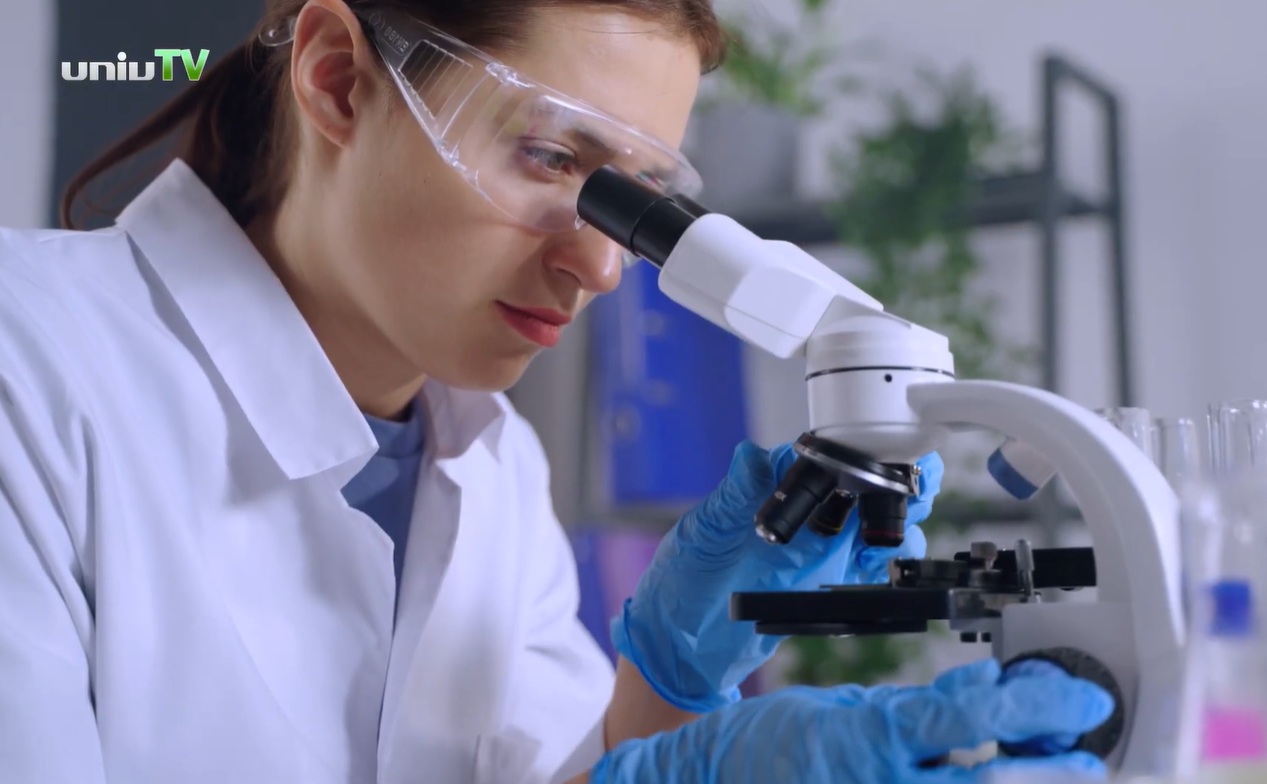
Dr. Krisztián Kvell, Professor at the University of Pécs Faculty of Pharmacy and Head of the Department of Pharmaceutical Biotechnology, spoke on the 101.7 Best FM Pécs about the role and significance of biotechnology, the competitiveness of a biotechnology degree, and the advantages and unique features of the University of Pécs’ programme. The interview was held in light of the upcoming deadline for modifying the ranking of higher education applications.
Dr. Kvell, who also serves as Head of the Biotechnology BSc Programme, explained that biotechnology encompasses several interconnected disciplines. In simple terms, biotechnology involves entrusting certain tasks to living systems and cells, often resulting in faster and more cost-effective solutions. Consequently, the programme requires a comprehensive approach, combining biological and chemical foundations with mathematical and biostatistical knowledge, as well as strong practical laboratory skills.
The programme is designed for students interested in the natural sciences who are eager to understand complex problems and work in a laboratory environment. The combination of the Biotechnology BSc programme and the corresponding MSc programme offered by the University of Pécs Medical School can be particularly valuable on the labour market, as integrating knowledge from different fields provides graduates with a significant competitive advantage.
Dr. Kvell emphasised that a degree in biotechnology opens the door to a wide range of career opportunities. Biotechnology companies already operating in the region offer employment prospects even for graduates with only a bachelor's degree, while the knowledge acquired is highly transferable in an international context. One of the distinctive features of the programme in Pécs is that it is taught entirely in English, facilitating integration into the international scientific community while helping students engage with scientific literature and pursue career opportunities abroad.
The interview also touched upon the evolving role of pharmacists. While traditional, chemistry-based pharmaceutical manufacturing remains highly important, the proportion and significance of biotechnological products continue to grow. This transformation is reflected in education as well: in Pécs, the biotechnology perspective has become an integral part of pharmacy education, ensuring that graduates enter the labour market with knowledge and skills aligned with future demands.
The discussion also addressed the role of artificial intelligence (AI), which is increasingly permeating all areas of life, including drug development. AI can help identify research directions that are unlikely to prove successful outcomes, allowing resources to be allocated more efficiently to promising developments.
Dr. Kvell highlighted that biotechnology is a rapidly advancing field with growing international importance, offering students strong and promising long-term career prospects.