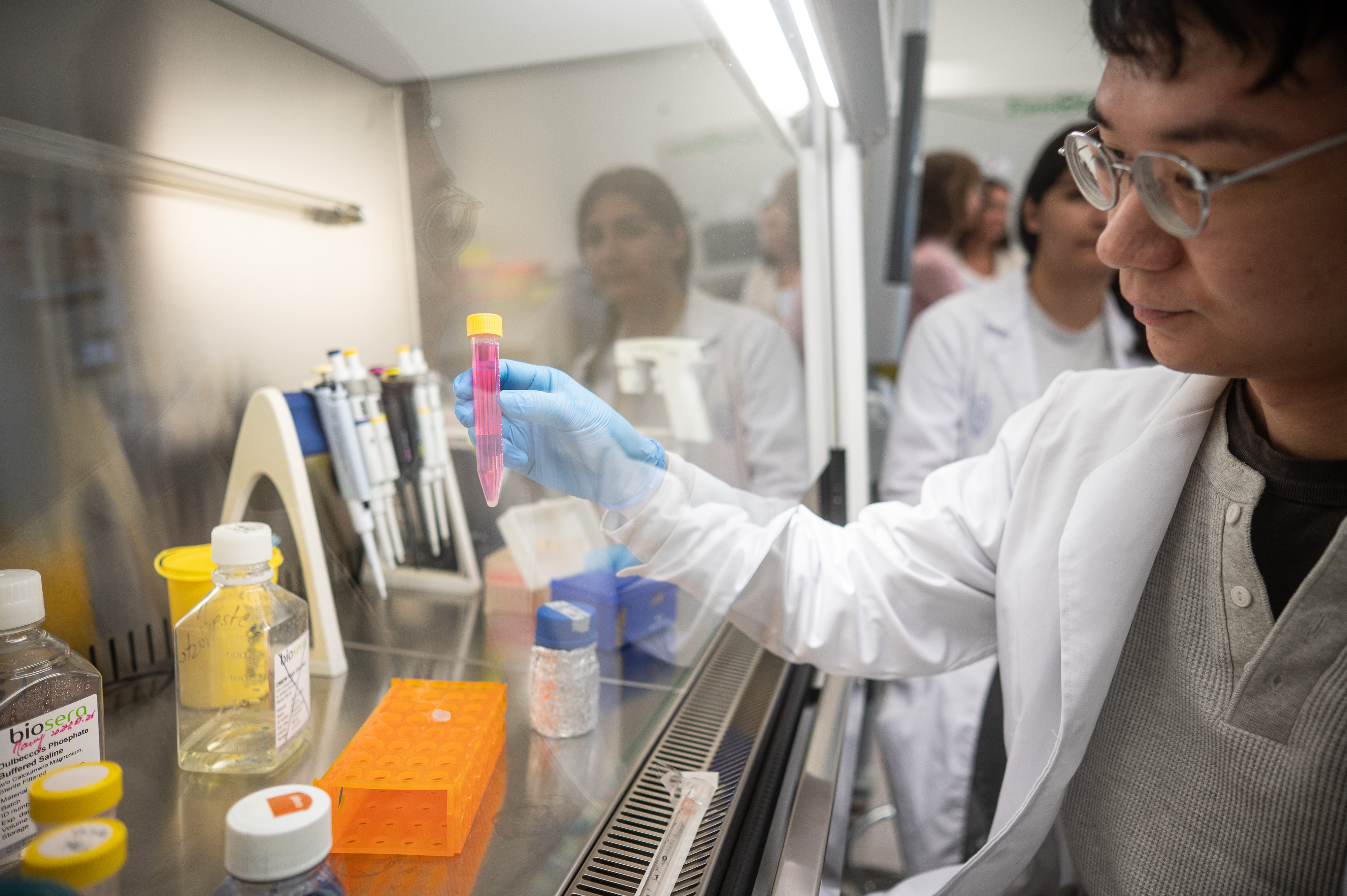
From personalised medicine and ensuring access to safe and sufficient food to cleaning up the planet’s water resources, biotechnology could offer solutions to some of the greatest challenges facing humanity. Professor Judit Pongrácz, Head of the Institute of Pharmaceutical Biotechnology at the Faculty of Pharmacy, University of Pécs, and Programme Director of the Biotechnology BSc programme in Pécs, spoke to Index.hu about the potential of the field and the biotechnology programme offered in Pécs.
The term “biotechnology” itself is only a few decades old, but the technology behind it dates back thousands of years. Humanity has long used biotechnological processes such as brewing beer, making cheese and selectively breeding plants, largely through practical experience and without understanding the mechanisms behind them.
A major breakthrough came in the 1980s with a better understanding of how genes function and the discovery of ways to modify them.
“The revolution in genetics has led to the development of an increasing number of new technologies and methods. Gene modification forms the foundation of biotechnology, and it underpins a wide range of biotechnological applications. Over the years, the field has also expanded to include an increasing number of specialised areas,” Professor Judit Pongrácz explained in the article.
She pointed out that biotechnology has applications across a wide range of fields and could help address many of the challenges facing humanity.
“In 2016, a new species of bacterium was discovered in Japan that consumes PET bottles, obtaining the carbon molecules it needs from them. Through biotechnological methods, this organism could potentially be encouraged to consume more and do so more quickly, enabling it to break down this type of plastic waste more efficiently,” she highlighted. She added that similar biotechnology-based solutions could potentially be used to clean up polluted water and remove oil spills.
Biotechnology has also transformed medicine and pharmacy through what is known as medical or “red” biotechnology. Scientific research in this field involves not only physicians, but also physicists, biologists, chemists and pharmacists working together.
Biotechnology has contributed to the development of an increasing number of new patents and technologies in vaccine production in recent years. Professor Pongrácz also highlighted that the mRNA-based vaccine technology that brought Katalin Karikó international recognition is based on biotechnological research and methods.
She also pointed out that biotechnology could bring further breakthroughs in plant and animal breeding, fields that have traditionally relied primarily on empirical methods. Such advances can be achieved without genetic modification. Tissue printing is another field in which biotechnology plays a significant role. According to Professor Judit Pongrácz, the technology has the potential to fundamentally transform medicine, although its further development is still ongoing. Future biotechnologists will play a key role in refining tissue and organ printing technologies and expanding their application across healthcare.
The full article is available here:
A wide range of career opportunities await biotechnology professionals graduating in Pécs